
I remember sitting in front of my camera in November 2021, joining the virtual Horasis Asia Meeting. The world was still untangling itself from the immediate shockwaves of the pandemic, and I had been invited to join a panel titled “Asians as Futurists.” To be honest, I felt a bit out of my depth surrounded by generals and global economists, but I was there to share an operator’s perspective on building technology.
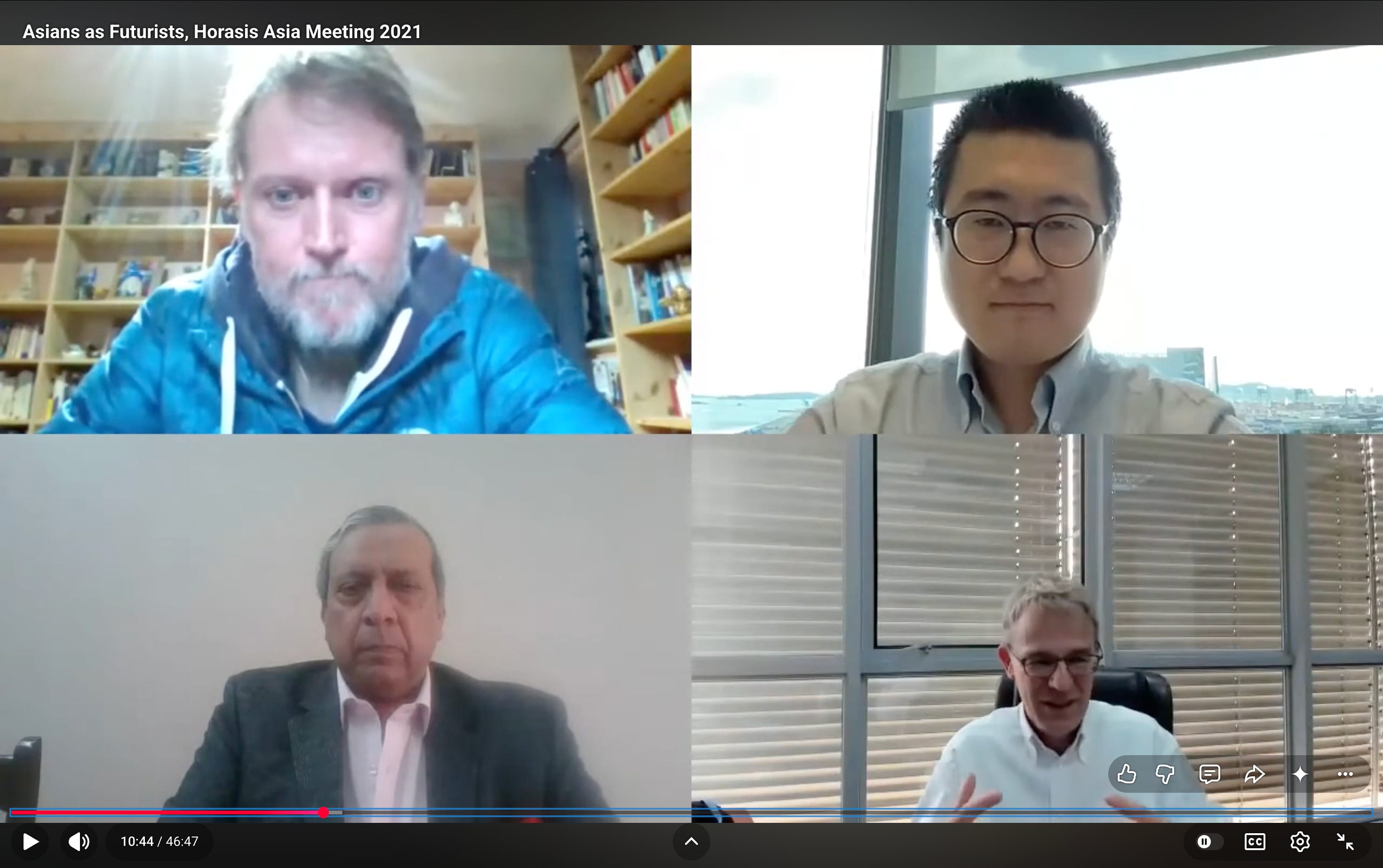
The core question on the table was heavy: How would Asia’s innovation, leadership, and cultural resilience shape a post-pandemic world, especially given the rapid acceleration of technology?
At the time, the conversation naturally gravitated toward digital infrastructure. Benjamin J. Butler, Founder of the Embassy of the Future, chaired the discussion with real insight. Klaus Neumann, Senior Vice President at SAP China, correctly pointed out that Asia’s success in managing the pandemic was largely due to the immense application of technology and a cultural willingness to embrace new digital tools. Lieutenant General Sudhir Sharma, Chairman of Mitkat Advisory Services in India, expressed strong optimism for a “V-shaped” recovery, driven by an accelerating spirit of entrepreneurship.
But Lieutenant General Sharma, drawing on his military and strategic background, also warned us. He pointed to looming geopolitical, ecological, and cyber risks, even assigning a 60% probability to a serious regional conflict within the next decade.
Looking back from April 2026, sitting in a world where autonomous AI agents are reshaping enterprise software while energy markets absorb the shockwaves of the ongoing conflict in the Middle East, his prediction feels uncomfortably prescient.
We are operating in a fundamentally different reality today. And yet, when I reflect on what I shared during that panel, one specific observation stands out as more relevant now than it was five years ago.
I argued that Asia’s growth is driven not just by consumerism, but by a unique “willingness of creativity.” In places like South Korea, a “less obedient” tactical mindset fosters “out of the box” thinking, contrasting sharply with more traditional manufacturing cultures.
More importantly, I emphasized a principle that I’ve learned the hard way, often through my own failures in scaling companies. It’s this: culture eats strategy for lunch.
In 2021, I applied that principle to the success of distributed workforces, arguing that future governance depends more on human-centric dialogue and trust than on technological infrastructure alone. Today, as we deploy multi-agent systems and grapple with global uncertainty across Asia and the Gulf, that principle is being tested under immense pressure.
The agentic reality of 2026
We are no longer just talking about AI as an assistant that drafts emails or summarizes meeting notes. We are building and deploying autonomous reasoning engines that understand context, plan workflows, connect to external tools, and execute actions across entire enterprise systems. Agentic AI is moving us from task automation to wholesale process reinvention.
But here is the reality I see on the ground, whether I’m working with engineering teams in Singapore, scaling operations in Seoul, or advising enterprises in Riyadh. I’ve made the mistake of thinking a new tech stack would solve operational issues, and I’ve paid the price for it. The bottleneck for AI adoption is rarely the technology itself. The bottleneck is the culture.
When you deploy an AI agent to manage your supply chain or handle complex financial underwriting, you are not just installing software. You are fundamentally changing how decisions are made and who (or what) makes them. If your organizational culture is rigid, top-down, and punishing of failure, your AI initiatives will fail. They will be stifled by a lack of trust and an inability to adapt.
The “willingness of creativity” I mentioned in 2021 is exactly what is required to build effective human-agent collaboration today. It requires a culture that is willing to experiment, willing to let go of legacy processes, and willing to trust autonomous systems while maintaining rigorous, human-centric oversight.
Navigating geopolitical uncertainty
This cultural adaptability is equally vital when navigating the current geopolitical landscape. The conflict in the Middle East has sent shockwaves through global energy markets and supply chains, testing the economic resilience of both Asia and the Gulf.
Yet, amidst this uncertainty, we see regions that are actively building resilience through innovation. The UAE and Singapore, for example, continue to attract investment and talent not just because of their geographic positioning, but because they foster environments that prioritize forward-looking governance and technological adoption.
During the Horasis panel, I raised concerns about data abuse and the security of sensitive information. In an era of geopolitical tension and autonomous agents, those concerns are magnified exponentially. Secure, sovereign AI infrastructure is no longer a luxury; it is a strategic necessity.
For Asia and the Middle East to strategically navigate these dual forces (the rise of agentic AI and regional instability), they must lean into their unique strengths.
Embrace the “less obedient” mindset: The regions that will thrive are those that encourage tactical creativity. When supply chains break down or energy prices spike, rigid adherence to the old playbook is a liability. We need operators who can think outside the box and leverage AI to build dynamic, self-healing systems.
Prioritize human-centric trust: As we delegate more authority to AI agents, the human element becomes more, not less, important. Trust (between cross-border teams, between citizens and governments, and between humans and machines) is the ultimate currency. You cannot code trust; you have to build it through dialogue and integrity.
Build sovereign resilience: The intersection of AI and geopolitics means that controlling your own technological destiny is critical. This means investing in local AI talent, securing critical data infrastructure, and building agentic systems that reflect regional values and priorities.
The enduring lesson
Building across Korea, the US, Singapore, Dubai, and Riyadh hasn’t given me a crystal ball, and I’ve certainly made my share of miscalculations trying to predict where markets are heading. But the mistakes I’ve made, and the teams I’ve had the privilege to lead, have taught me one enduring lesson: technology changes rapidly, but human nature does not.
In 2021, we were looking toward a post-pandemic future, hoping that digital tools would save us. In 2026, we have those tools in the form of incredibly powerful AI agents, but we are facing new, complex crises.
The lesson remains the same. You can have the most advanced multi-agent architecture in the world, and you can map out the perfect strategic response to market volatility. But if you do not have a culture built on trust, creativity, and resilience, it will fall apart under pressure.
Strategy is necessary. Technology is an accelerant. But at the end of the day, culture still eats strategy for lunch.