
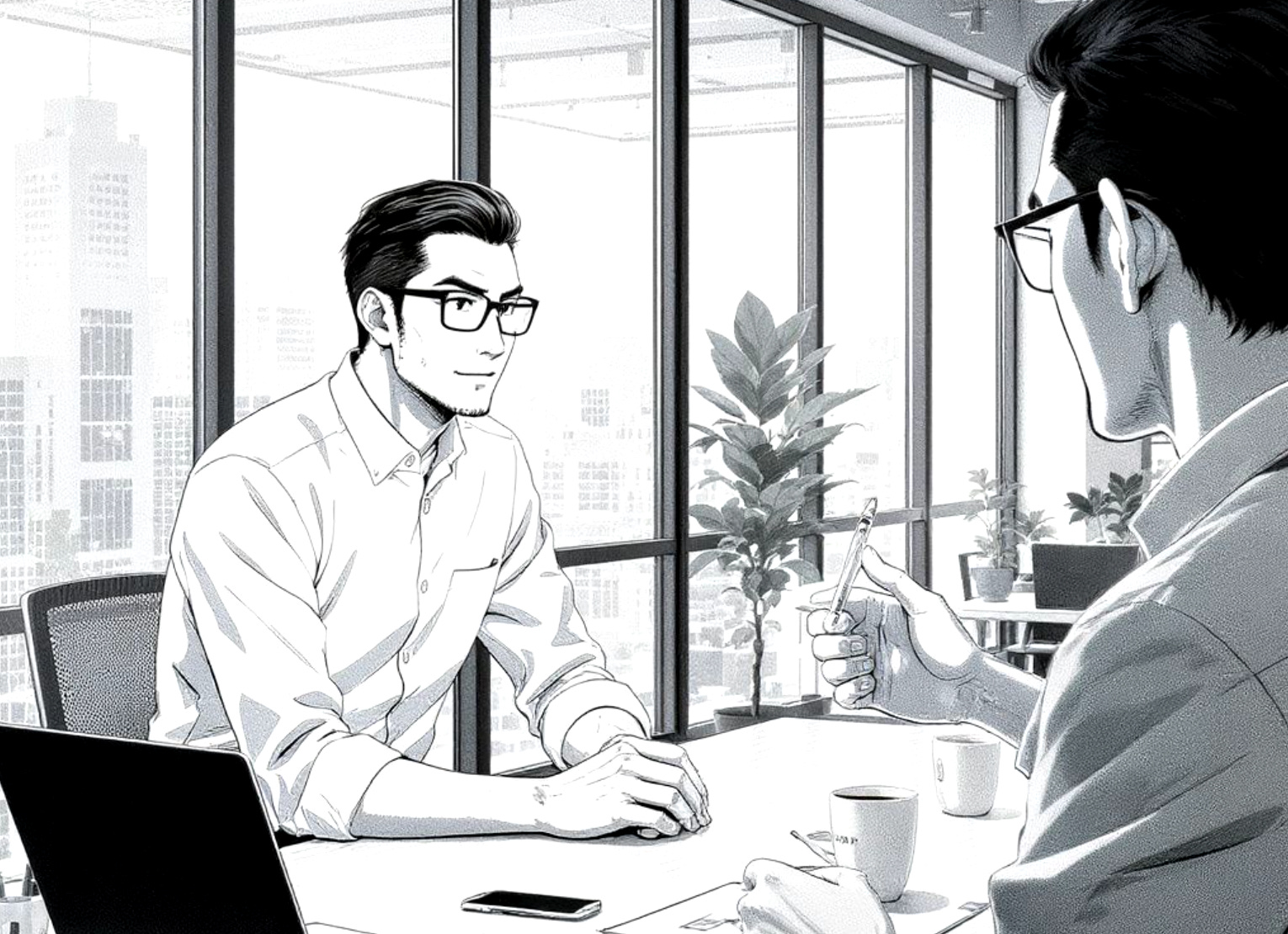
Most people have more story than they know what to do with.
A week of meetings, decisions, small wins, quiet frustrations, moments that meant something. And almost none of it gets told. Not because it isn’t worth telling, but because the gap between living something and shaping it into a story is wider than most tools have ever tried to close.
That gap has been bothering me for a while.
The tools got powerful. The problem didn’t go away.
There’s no shortage of AI tools for expression right now. Text generators, image makers, video creators. The output quality has never been higher. And yet most of what gets produced still feels generic, because the tools are only as specific as what you put in. They’re powerful, but they still put the full burden of storytelling back on the user.
You have to know what to say. How to frame it. What to prompt. And most people’s real stories don’t arrive pre-packaged like that. They’re fragmented. Unresolved. Half-remembered. The raw material is there, but the tools keep asking you to do the hardest part yourself before they’ll help you with anything.
That’s not a content quality problem. It’s a starting point problem. And the same gap shows up in how we build.
For founders building with AI, the version of this problem is just more visible.
Vibe coding is having a moment. But a lot of what I see underneath is UI-driven development dressed up in new language. Describe the interface, react to what comes back, tweak, repeat. No narrative spine underneath any of it. The interface was never the hard part, and agents don’t fix that. They just move faster.
If you couldn’t pitch your idea clearly in five minutes, covering who it’s for, what it must never do, and what success actually looks like, you probably aren’t ready to hand it to an agent either. Garbage in, garbage out. It just moves faster now.
What if the story already happened? What if AI didn’t have to wait for you to articulate anything, but just had to translate what actually occurred?
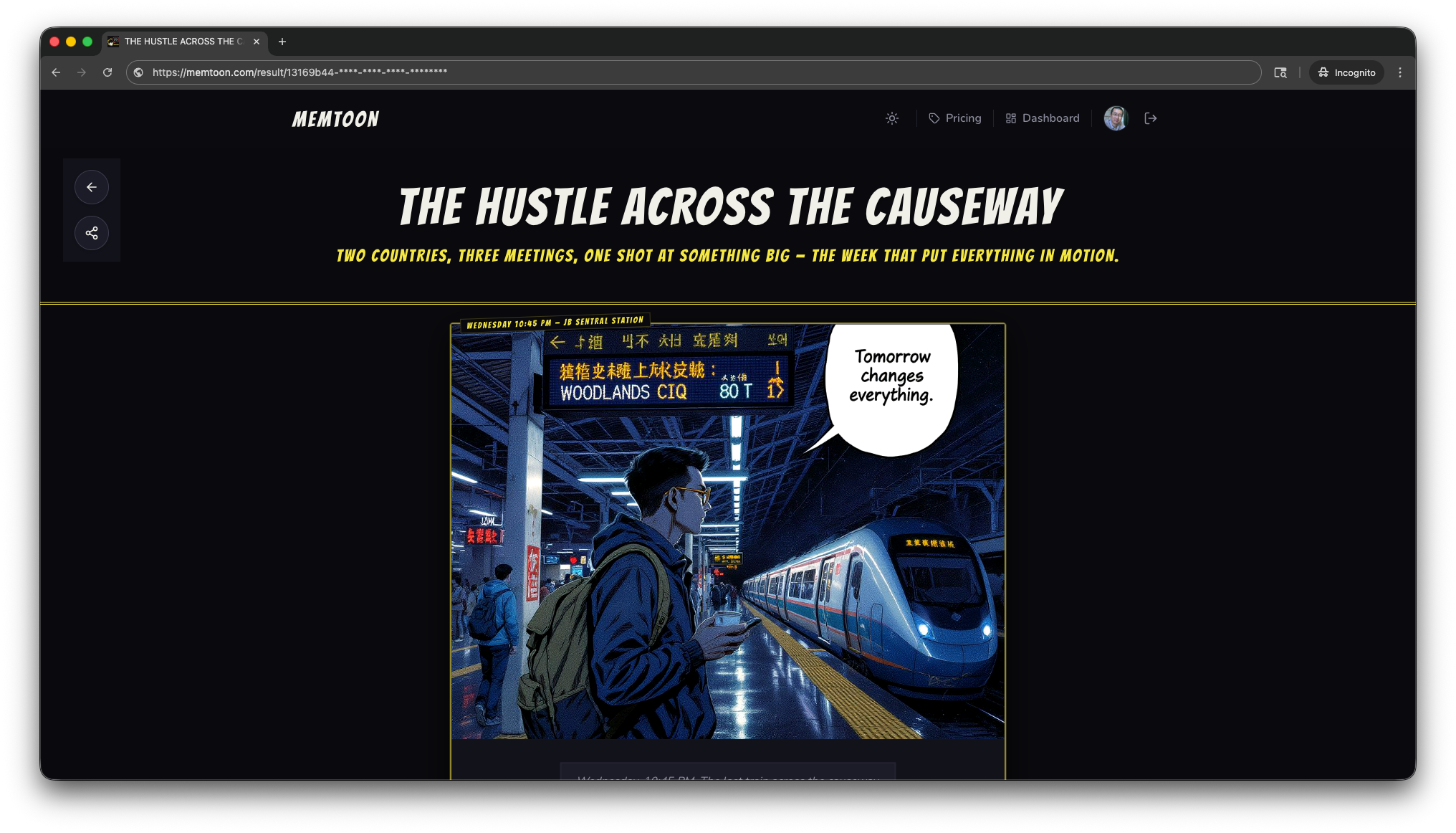
This is where Memtoon.com came from. Connect your Google Calendar, and your real week becomes a webtoon-style comic strip, written and illustrated by AI, with no prompting required on your end. Your events are the raw material. The story shapes itself.
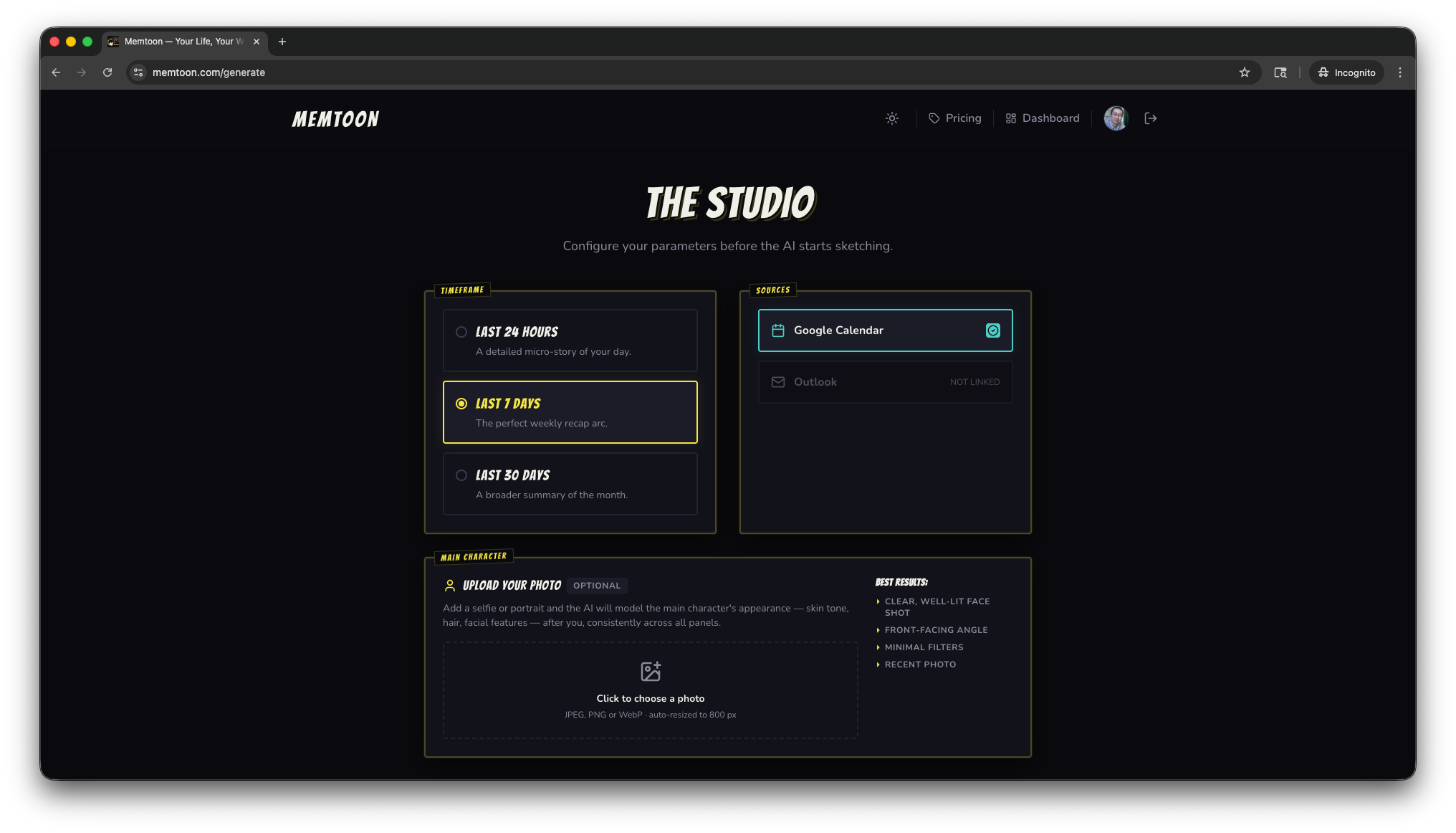
Building it required me to practice what I’ve been describing. I had to tell the agent a complete story before a single line of code: who the user is, what the product must never do, what privacy-first actually means as a constraint rather than a claim. Calendar data fetched, used, discarded. Selfies deleted within seconds across every code path. Not policy language. Architecture.
And because I believe a good story is built through dialogue, not instruction, I asked the agent to maintain a living document recording every design decision it made beyond my direction, and every instance it chose a different approach, along with its rationale. Not a changelog. A record of its reasoning. So I could ask: why did you choose this? what were you protecting? That’s not a workflow preference. It’s a different belief about what building actually is.
Here’s an ask I’m leaving with you.
Memtoon is live at memtoon.com. There’s an explainer video that walks through how it works. Check it out and tell me what you actually think.
But the question underneath all of this isn’t really about Memtoon. It’s about where your story is living right now, and what it would take for it to finally get told.
The story was always the product. It just took AI to make that undeniable.